
By Ken Kobayashi, MD
Earlier today, the White House announced that “We are officially terminating the so-called endangerment finding, a disastrous Obama-era policy that severely damaged the American auto industry and massively drove up prices for American consumers.”
With these words, the Administration has embraced climate denial as official U.S. policy, ignoring the life-threatening impacts of climate change that millions of Americans face every day. This is no longer a partisan issue. Climate change is increasing costs for all of us by damaging property, disrupting businesses, causing workers to miss work, and increasing the costs of healthcare, electricity, and insurance.
The 2009 Endangerment Finding found that climate change causes a serious threat to human health, obligating the EPA under the law to regulate greenhouse gas emissions and pollutants in order to protect the American people. The EPA should only update the scientific underpinnings of the 2009 Endangerment Finding based on credible, peer-reviewed science, such as the assessment reports of the Intergovernmental Panel on Climate Change (IPCC). Instead, EPA’s repeal decision is based on a report hastily commissioned in secret by the DOE and EPA ahead of the EPA’s action and authored by known climate contrarians whose findings have subsequently been roundly debunked and rejected by the scientific community. Furthermore, in transparent efforts to bury the evidence on climate change and support its own “alternative facts,” the Administration has systematically dismantled our capabilities to research and assess climate change and to make the evidence publicly available,
In September 2025, the National Academy of Sciences (made up of America’s most eminent scientists and engineers) issued a report to inform EPA’s deliberations on the Endangerment Finding that not only supported the accuracy of EPA’s 2009 Endangerment Finding but also found that it “… has stood the test of time, and is now reinforced by even stronger evidence.” The Finding has survived multiple challenges in court. More than 1000 scientists, public health experts and economists recently warned the EPA that climate change poses severe harms to human health and well-being, that climate change is clearly increasing the likelihood of extreme events, and that the economic toll of climate change is rising. Over 230 medical journals around the world have recognized that the health effects of climate change are catastrophic and impair our ability to treat and care for cancer patients. The EPA and Administration has determinedly ignored this weight of scientific opinion and ignore the voice of the people, as clearly evident in the fact that 571,673 comments were submitted in response to this rule change, but only 5.4% (30,926) have so far been approved for release by EPA.
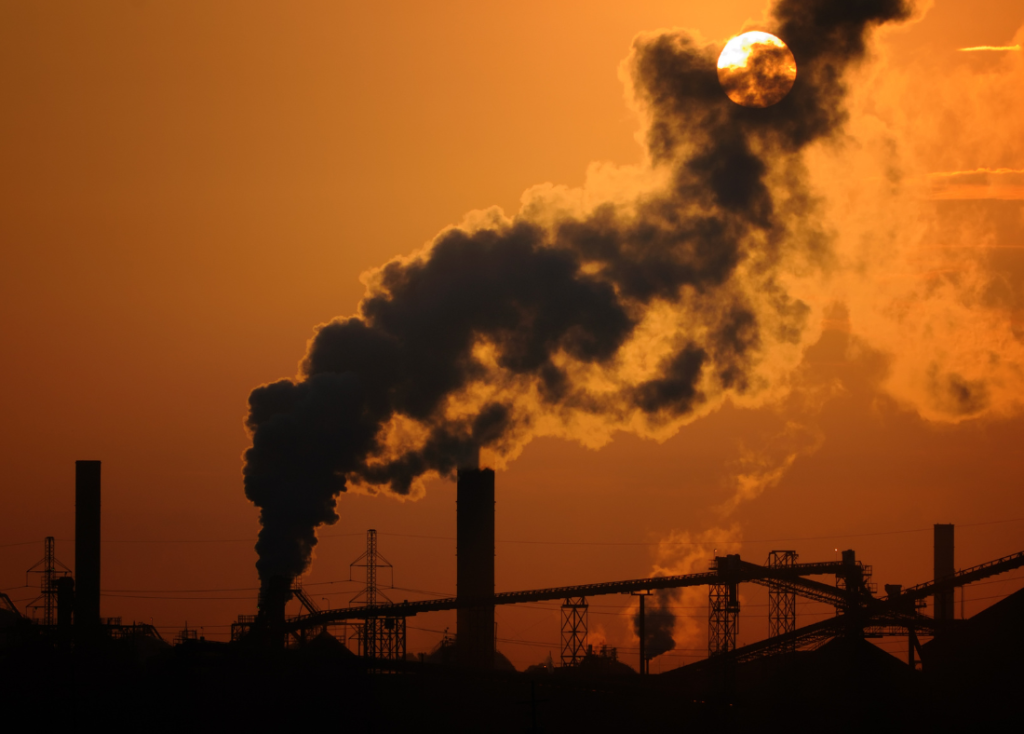
Vehicle emissions are a major contributor to climate change and directly harm public health. Transportation is the largest source of climate pollution in the U.S. and accounts for nearly 30% of greenhouse gas emissions.
Air pollution is a particularly clear example of the health damage caused by climate change: overall, an estimated 7 million people die each year from causes related to air pollution and the expense of treating consequences of air pollution is billions in health care costs alone every year. The International Agency for Research on Cancer (IARC) has classified outdoor air pollution and particulate matter smaller than the diameter of a human hair (PM2.5), a central component of air pollution, as carcinogenic to humans. We all know that smoking is the leading cause of lung cancer worldwide, but exposure to air pollution also increases the mortality from lung cancer, including in people who have never smoked. In fact, 15% of all lung cancer worldwide is attributed to PM2.5. Air pollution has also been linked to increased rates of breast cancer. The air quality around oil drilling and extraction sites is extremely poor, and the incidence of childhood leukemia increases the closer one lives to fracking sites.
The dangers of climate change confront us in our daily lives. Extreme heat is driving more illness and death, especially among the most vulnerable. The consequences are felt in sectors like outdoor recreation, agriculture, and construction. Waters polluted by oil spills have devastated fishermen and the communities that rely on them, as witnessed by the 2021 Orange County and 1990 Huntington Beach oil spills. Californians are paying higher home insurance premiums and some insurers are withdrawing from the California market.
Climate disasters like the California wildfires cost lives, threaten food and water safety, and displace people from their homes. All San Diegans witnessed the Palisades wildfires a year ago, which caused $1 billion in damages, one of the 23 billion-dollar, climate-related events in the United States in 2025. The men and women fighting wildfires on our behalf also suffer health consequences: Occupational exposure as a wildlands firefighter is officially recognized as “carcinogenic to humans” (Group 1) based on “sufficient” evidence for cancer in humans.
But local climate disasters can have nationwide effects. For instance, residents of New York and the Atlantic seaboard have experienced worsened air quality as a result of the Canadian fires. Decreased air quality due to West Coast wildfires has been documented across the country, all the way to the Eastern Seaboard. In 2018, Hurricane Maria struck Puerto Rico and caused the closure of factories manufacturing intravenous bags. This caused a months-long shortage of these bags in the continental United States, which are crucial in performing surgeries, treating critically ill patients, and administering important medications for infections, cancer treatment, and a myriad of other medical conditions. This shortage led to rationing of care, increased health care costs, suboptimal treatment administration, and postponement of nonessential surgeries.
These burdens do not fall equally. Communities of color, outdoor workers, as well as vulnerable populations like children, older people and people with disabilities, face the brunt of climate impacts disproportionately. These harms are compounded when communities are hit hard or repeatedly or face multiple climate hazards at once, for instance when wildfire smoke affects communities that border major roads and freeways or are located near oil refineries, as would have been the case if the plans for the National City oil refinery had gone through.
Strong regulatory standards do have an effect, as any comparison of photographs of smog-filled Los Angeles in the 1970s with those of Los Angeles today will plainly show. More recently, the growth of zero-emission vehicles in California in the four years from 2019-2023 showed clear benefits in improved air quality due to reduced tail-pipe emissions, and the number of such ZEVs has accelerated since then. The growth of the clean vehicles industry has been remarkable and now supports hundreds of thousands of family-sustaining jobs across the country. Rolling back the Endangerment Finding could slow down these and other economic benefits, reverse the environmental benefits, and result in death and harm for millions of Americans, now and in future generations.
SanDiego350 strongly opposes this rollback of the Endangerment Finding and decries the lack of public engagement and scientific rigor in the discussions that have led to this action.