
By Megan N. 7th grader, Youth4Climate Member
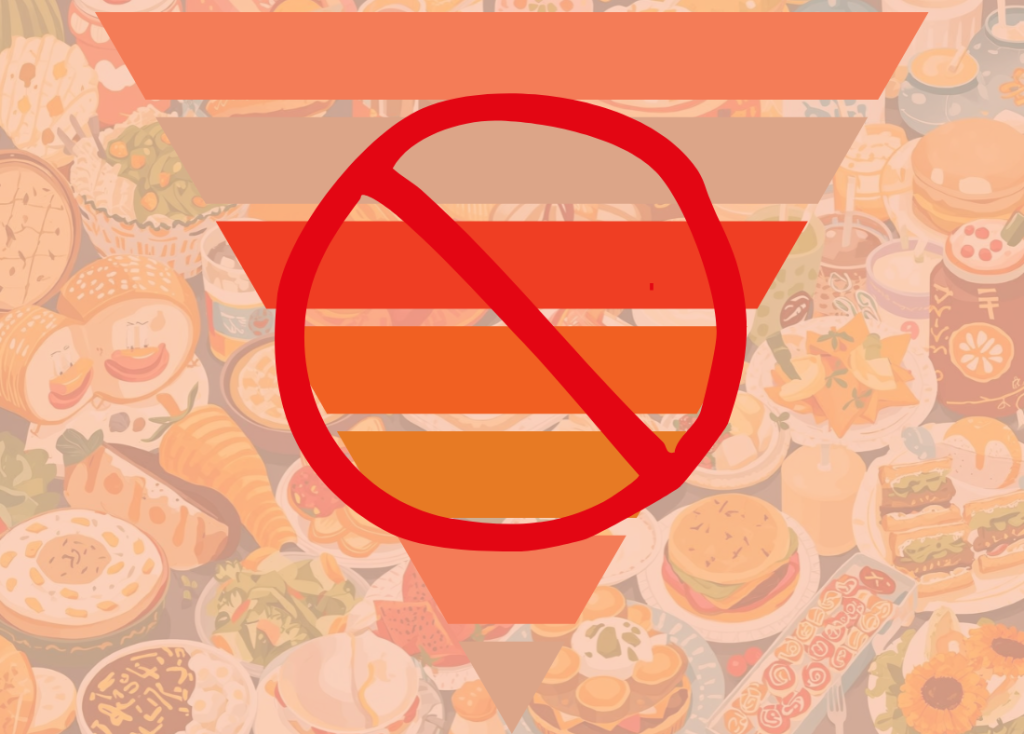
On January 7th, the Trump administration released the new, inverted food pyramid. This pyramid puts red meat and dairy at the top, with processed carbs at the bottom. The new 2025–2030 dietary guidelines recommend prioritizing protein at every meal, limiting sugar intake, minimizing consumption of processed foods, consuming whole foods, and incorporating fats from animal products like red meat and eggs, as well as nuts and avocados. These guidelines reflect a growing trend of prioritizing protein and whole foods.
What’s most concerning about this food pyramid is the lack of scientific basis, and the fact that it’s driven by industry interests, specifically by the Big Meat and Big Dairy industry. Eight of the nine authors of the scientific report underlying the new Dietary Guidelines took funding or other compensation from meat, dairy, and egg corporations. The USDA and HHS blatantly ignored the Federal Advisory Committee Act. This act mandates that the Guidelines will not be influenced by the appointing authority or any special interest.
The new guidelines are putting profits over people and our planet, and will likely influence policies within schools and institutions. The food pyramid will have disastrous consequences on our already declining planet and our health.
Right now, half of all Earth’s habitable land is used for agriculture, and 80% of that land is used to raise livestock for meat and dairy. Our livestock-dominant food system is the primary driver of biodiversity loss. Humans and livestock (mainly livestock) make up 95% of the world’s mammalian biomass. Wild mammals make up only 4% of the world’s mammals!
Soy is a major driver of deforestation, and nearly 80% of soy goes towards livestock feed. Deforestation directly contributes to climate change. Burning forests releases the carbon stored in the trees. Destroying forests also prevents their abilities to act as carbon sinks, soaking up carbon dioxide from our air. Since 1850, 30% of all CO2 emissions have come from deforestation.
Not to mention beef production alone can emit nearly 90 times more CO2 per 100 grams of protein than peas. When comparing plant based proteins and animal based proteins, the plant based options always have a significantly lower environmental footprint.
From an environmental justice standpoint, industrial animal agriculture is an industry that people should hold accountable just as they do Big Oil. Factory farms pollute dangerous numbers of air pollutants: hydrogen sulfide (this causes nasty odors for locals, and perpetuates acid rain and regional haze), ammonia (which causes respiratory issues), particulate pollution (which can trigger asthma and heart attacks), and volatile organic compounds (which leads to headaches, nausea, and elevated cancer risk).
Despite the damage factory farms inflict upon our Earth, industrial animal agriculture is mostly exempt from both federal and state air and water pollution regulations that apply to most other industries.
For all this environmental destruction, meat and dairy account for only 18% of the world’s calories and 37% of our total protein.
Regarding health, although the pyramid does stress minimizing ultra processed foods in your diet, which evidence indicates to be beneficial, the recommendation of increased consumption of meat and dairy is harmful to human health.
In the US, heart disease, on average, accounts for 1 in 5 deaths and is the leading cause of death in America. According to the Academy of Nutrition and Dietetics, the new food pyramid’s emphasis on butter, beef tallow, red meat and full fat dairy is inconsistent with the Academy recommendation of limiting saturated fat to 10% of total calories.
The average American already eats 224 pounds of red meat each year, leading the world in meat consumption. Increasing meat intake will only worsen our heart disease epidemic. Researchers found that each 50 g/day higher intake of unprocessed red meat (such as beef, lamb and pork) increased the risk of coronary heart disease by 9%; according to a study done by the National Institute of Health, eating red meat everyday triples the heart disease-related chemical TMAO.
The new dietary guidelines are harmful for public health and our planet, not to mention the billions of animals trapped inside factory farms. If we want a sustainable, healthy ethical future, we need to move towards a vegan future.