
By Carmen Berry, SanDiego350 Member
Not caring is the most dangerous thing we can do for our planet.
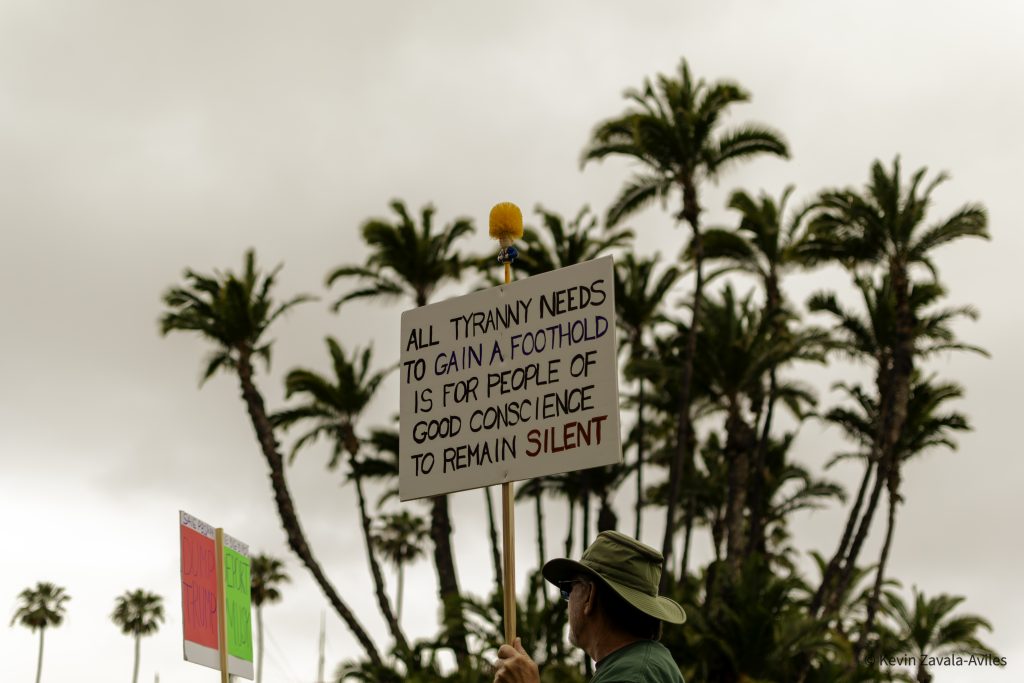
High-risk environmental behaviors are dominating our political landscape, trickling down to harm our most vulnerable populations. In order to address ongoing environmental harms and improve sustainability outcomes in our communities, we must realize civic participation as a necessary way to support lasting change.
Civic engagement can be defined as community service, collective action, or political involvement that addresses an area of public concern. Civic engagement plays an essential role in fighting ongoing global environmental problems such as biodiversity loss, deforestation, and climate change by promoting positive behaviors that reduce harm to the environment and holding climate aggressors accountable for their attacks on our planet. By encouraging people to express their political opinions and improve the quality of communal life as global citizens, civic engagement in the form of volunteering, electoral outreach, and political communication is a powerful tool to fight climate injustices.
According to a study by Pew Research Institute, 60% of Americans surveyed stated that they believed their elected officials were doing too little to reduce the effects of climate change. Despite this, elected officials are weakening American climate policy to prioritize fossil fuel expansion. Political instability in the U.S. has created increased visibility for pro-democracy civic behaviors, such as advocating for voting access, local policy advocacy, and organized protests- all of which can be used to support improved environmental protections. As more Americans are interested in improving sustainability and addressing climate change, civic participation will be crucial to creating effective climate strategies and improving environmental outcomes on a local and global scale.
Civic engagement provides opportunities to address inequality by dismantling systems of oppression, uniting global citizens around common causes. Currently, environmental harms are economically stratified, with the most politically disenfranchised communities bearing the brunt of displacement, environmental pollution, and resource scarcity. Historically, marginalized groups have been subjected to targeted exclusions in spaces of both political and environmental decision-making, resulting in systematic underrepresentation that impacts health and economic outcomes. Despite this, we continue to see outstanding strides towards addressing inequality through integrated advocacy approaches to policy and community-strengthening. By reducing barriers to political participation, civic engagement gives communities a platform to combat global environmental challenges through both direct community outreach and policy interventions.
Poor resource management, divestments in renewable energy, and a failure to confront pressing environmental issues have created conditions which exacerbate inequality and suppress civic engagement and resistance. Climate-change related environmental events weaken democracy by increasing political instability, and prevent political accountability by creating additional barriers to civic participation. Climate change will exacerbate democratic backsliding unless we can work to engage citizens across cultural, racial, political, and regional differences- making civic engagement essential to informing effective solutions to manage these intersecting crises of democracy and climate.
People see political decisions regarding climate as being outside of their immediate control, making it essential to highlight civic engagement as a method to shape climate policy. Currently, San Diego 350 is working to strengthen environmental protections through legislative advocacy, coupled with grassroots efforts to expand affordable clean energy and public transportation within the City of San Diego. In addition to this core programming, SD350 is committed to Stand Up For Democracy; our new chapter focused on voter outreach and coalition building to protect voter rights and strengthen environmental protections.
For information regarding SD350’s Stand Up For Democracy campaign – Click the link HERE