
From “Beyond the Theme Park: Struggle and Solidarity Under the San Diego Sun” (2026)
By Kelly Mayhew and Jim Miller from the Jumping Off Place
Article by The Jumping Off Place
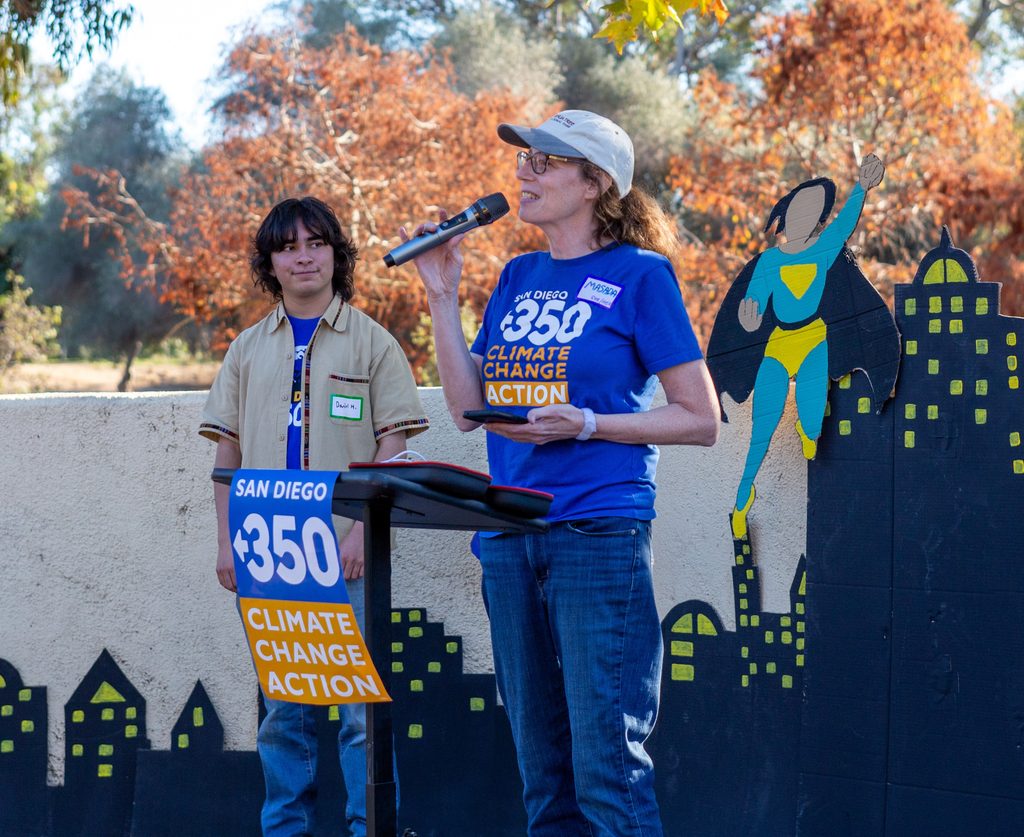
For the next few months, The Jumping-Off Place will be featuring interviews from Beyond the Theme Park: Struggle and Solidarity Under the San Diego Sun (2026), an oral history project which comprises part of our research on an updated edition of our peoples’ history of San Diego, which we coauthored with Mike Davis, Under the Perfect Sun: The San Diego Tourists Never See (7 Stories Press, 2026).
From the introduction:
Even as the region has undergone a historic political realignment and there have been significant victories for labor, environmental, and community activists, the work of transforming San Diego into not just a Democratic Party stronghold but a city that embodies genuinely humane, egalitarian values remains. This collection of interviews gives a gloss of what it took to start changing San Diego and what it might take to truly address some of our region’s systemic challenges.
The interviews here are with elected officials at the state, county, and city levels, leaders of unions and activist organizations, as well as ordinary San Diegans. Beyond the Theme Park: Struggle and Solidarity Under the San Diego Sun provides a starting place for a picture of San Diego that moves beyond the Chamber of Commerce version of the city to a historic portrait of struggle, failure, victory, and persistent idealism—or how to make fundamental change in an American city with an exceptional aversion to it.
In today’s installment, we hear from Masada Disenhouse, Executive Director and Co-Founder, San Diego 350
I have lived here now for about 18 years. I lived most of my life in New York City. Originally, I thought that I wanted to go into environmental work–I’ve always been an environmentalist, and thought I wanted to go into environmental policy. So initially I set out to get a PhD, but I found that I don’t have the patience to be a research scientist and honestly, looking back, if I could do it over, I’d probably go for political science instead of physical chemistry. I bailed with my master’s degree, but I have a lot of understanding of how the science works and what drives things now since before I moved here. I started my activist universe when I was out of grad school. I worked all the way through college and didn’t have time to do anything else other than work and go to school. When I got out of grad school, I became involved with both the Green Party and also with a local effort to preserve the waterfront in Brooklyn, where I lived. I also worked for an organization that did weatherization work, which is, insulating and making low income housing more energy efficient. So I really got introduced to the universe of both energy and racial and economic justice issues, which in New York are considerable.
I also got introduced to climate change because my boss was like, “Here, read this IPCC report.” It was the second one. So I read the summary–the 10 page version. But I didn’t know climate change was a thing before then. I grew up loving nature. My parents used to take us camping, stuff like that, but I didn’t know it was a thing. And since then, I’ve been a climate activist.
I moved out here to San Diego with my partner, and I ended up working a little bit with the Sierra Club on their canyons program, which then became Canyonlands, which is now its own organization, separate from the Sierra Club. And I also worked at UCSD in more of a science capacity where I was organizing a science program for a while. But I got involved with climate stuff in 2010 when there was an initiative to try and suspend the climate legislation that Schwarzenegger had passed. And so I got involved in that effort. And by doing that in maybe the second or third year I was here, I heard about 350.org and then basically started planning for the next big 350.org events. And that’s how I got involved in that. There were maybe 15 or 20 of us who planned the first, really decent sized march in 2011. We weren’t setting out to form an organization or anything. But we held that event, and we had maybe 350, 400 people show up. Very few people were working on climate at that point in San Diego. The Environmental Health Coalition was pretty much it and Citizens Climate Lobby was started, but they’re different. But there wasn’t anybody doing grassroots organizing countywide. And so we decided to stay as a group after that and became San Diego 350, which is a nonprofit organization that does outreach and education on climate change and organizes people to take action in order to prevent the worst impacts of climate change and climate injustice.
Interestingly, 350 national, which I worked for, never set out to make chapters. They basically just did these distributed organizing days, and they had some materials to help people learn how to organize an event. But they really didn’t have anything about what people should do outside of that. And when we contacted them to say, is it okay with you if we use the 350 in our name? They were like, “Oh, you want to use our name? Okay, sure. Whatever.” So they didn’t really give us much of anything. I had worked at nonprofits, but I’d never been part of the operational side of them. I’d always been a program person. And so we had a lot of things to learn.
San Diego 350 was all-volunteer from the end of 2011 when we started, until sometime in 2014 when we hired a half time person. And that’s also when we got our nonprofit status. It wasn’t until 2014 that we tried to start raising money to fund the organization. Before that, we just organized as volunteers, and we started building out volunteer teams and doing some outreach and that stuff. We’ve kept growing so now we have around 15 volunteer teams, a lot of them working on policy. Some of them work on more operational things–onboarding new people or holding events, stuff like that. We have, now we will have five full time staff people, and a half time person and a few interns. So that’s impressive. We’ve been growing and we now have people who’ve been volunteers for 8-10 years. They understand how to advocate for policy, how the political landscape works, and how to do coalition building work—just all these pieces that none of us knew about. One of the big things that changed in there that I that I’m really proud of and is one of the things that makes me really hopeful, is the piece about working with youth. That was a conscious decision.
So in terms of what SD350 has accomplished, we’ve been part of coalitions that have won some really important things, some of the state legislation, and we’re plugged into a bunch of different state networks. And we’ve worked with education unions on divestment, which sadly, has not really moved yet, but will. We worked on SB 100 where the state set a goal of 100% clean energy. We’ve worked on other things too this year. California finally passed an actual ban on plastic bags and it passed a bill on bi-directional EV charging and stuff like that. So there’s a lot of bigger and smaller things that we’ve been a part of at the state level.
This year it was a big accomplishment to have the county finally pass a Climate Action Plan after they passed such terrible ones that kept getting thrown out in court. One of the things I’m proudest of is really shifting how people think about transportation. When we started working on transportation in 2012, the SANDAG plan was totally backwards on climate change. Their own plan showed “the state wants us to have carbon reductions that look something like this, and our carbon emissions look something like this little dip.” And now there’s an understanding that SANDAG needs to be fitting with the state plan. We’ve taken a step back after Hassan left, but getting to that place where there was a regional transportation plan that actually built more transit and had a goal of cutting emissions, that that was a big deal.
We also had some giant marches, and we’ve organized a ton of people. A conservative estimate is that we’ve gotten more than 30,000 people involved in one way or another, including people who’ve only come to one thing. We’ve organized all of San Diego’s large marches on climate change, including the biggest one which was the People’s Climate Mobilization, as it was called in 2017. It had about 5,500 people at it. And then in 2019 was when the Youth Strike started, and we helped students organize strikes at 25 different schools, including high schools and colleges. That turned about another 5,500 people out, who are really different people than the previous time. We’ve had a lot of other marches that ranged anywhere from several 100 to a few 1,000 people.
But just doing those things to get people mobilized so that they feel they can take the next step has been a big thing that we’re really proud of. And honestly, our organization still really runs primarily on volunteer power.
We also helped pass the original Climate Action Plan at the city of San Diego. We were one of the groups strongly advocating for the Community Choice energy program and pushing back on Sempra—raising awareness of Sempra and how SDG & E profits off of us while continuing to burn fossil fuels for energy.
The fact that most of the cities have climate action plans now, the fact that the county will pass things, shows progress. But San Diego is similar to lots of other parts of the country in that just as so much Democratic Party as a whole is, and specifically a lot of our Democrats still have so much alliance to corporate power and to the status quo. That makes it really hard to get things done. I feel a few years ago, if you had asked me, I would have said that we were doing great. I felt we were winning a lot of things, we had successfully pushed back on some of the utilities’ efforts to kill net metering and to suspend legislative bills, that that would have moved climate forward. And the regional transportation plan had passed and that was a big shift over where things were. But then the last couple of years have been bad—we’ve been taking steps back.
And part of that is even on things that are so obvious like the fights around electrifying buildings. Ultimately, the hard part of that is going to be electrifying existing buildings. And of course, it’s going to cost a lot of money, and there are a lot of questions about who can access those funds, and where’s that money going to come from, and stuff like that. But even things like just saying new buildings should be built without gas have ended up being really big fights. And a lot of that comes from some of the corporations. I feel like our biggest enemies tend to be the utilities, the fossil fuel industry, but also some big industries like real estate. It’s not like they still wouldn’t lease apartments if they didn’t have gas stoves in them, but they don’t want to. They just don’t want to do anything that’s going to make their apartments slightly less desirable than somebody else’s, potentially even if it’s just a fraction of the people who might be looking for an apartment with a gas stove. We also don’t have a lot of elected officials, either in San Diego or in the rest of the country, that are willing to stake their career on what actually needs to be done, and telling people the truth about what the status of things is.
People on the left need to think about whether the Democratic Party the way it’s constituted at the moment, serves their interests. I’ve never been a big Democratic party person, and I’m not sure there’s something better for us given how politics actually works, but I do know that it’s not serving us at either the local level or the national level at the moment. One of the things that San Diego 350 really tries to embody is seeing environmentalism as a core part of justice movements.
The city’s gotten a lot better on some areas that are non-controversial. San Diego has been good at protecting LGBTQ rights and championing those and it’s been able to take good positions on pushing back on bad immigration laws, things like that. And there has been some not insignificant, progress on climate stuff, having the CCA, having a Climate Action Plan.
But I would say that the big area that needs to change is really who controls things and where does the money come from? Because those are the things that are standing in the way of actually implementing the Climate Action Plan. San Diego and a bunch of other cities have pretty good climate action plans at this point. What they don’t have is the political will to make difficult decisions that affect some of those big interests we talked about before–the developers, for example–and they don’t have the money to go in and start changing things over to sustainable versions. That’s in that larger context of something like income inequality, which keeps growing. So we keep moving in that direction. And it just makes it makes it really difficult to get these things done.
Clearly there’s been some progress on things. Just the fact that the county has been spending more on certain things is good, but I also want to say I do think from an environmental perspective, there’s definitely been more awareness of environmental injustice and inequality—looking at things through environmental equity issues. There’s been so much more focus on that. And that’s been a really good thing, so it’s had some mixed dividends. So on the plus side there’s the climate equity fund. Other cities have, have implemented things like that too, where there’s money for it specifically and there’s money at the state level, at the federal level, at the local level, that has to be spent in communities of concern, to prioritize those that have lacked that investment. So that is a really good thing.